
What is Harvest Now, Decrypt Later?
For decades, modern cryptography has provided the foundation for protecting government communications, classified intelligence, citizen records and critical infrastructure. While today's encryption remains secure against conventional computing, the emergence of quantum computing has introduced a new long-term risk that is already influencing cybersecurity strategy across Federal agencies.
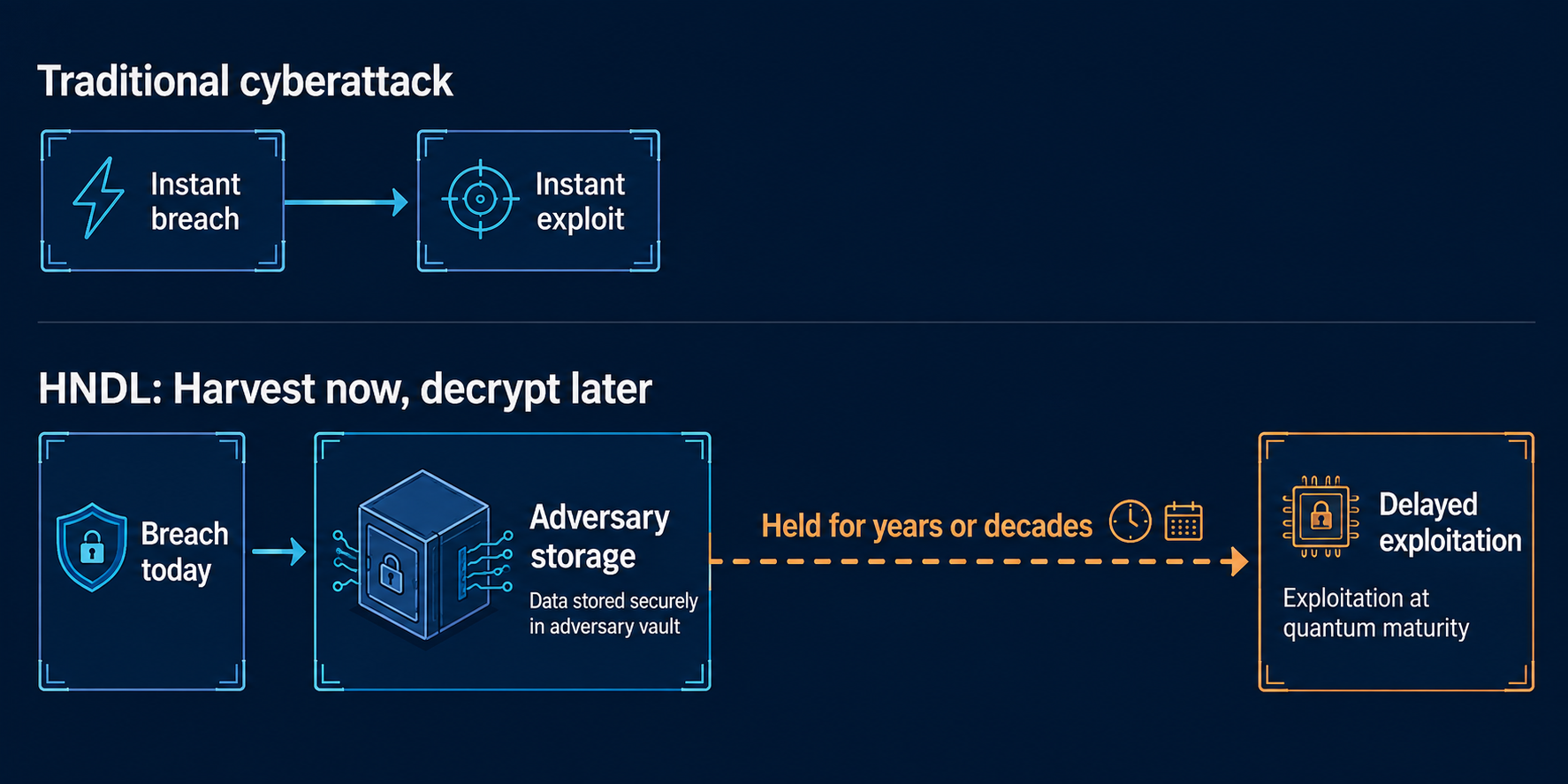
Known as Harvest Now, Decrypt Later (HNDL), this strategy involves adversaries intercepting and storing encrypted data today with the expectation that future quantum computers will eventually be capable of decrypting it. Unlike traditional cyberattacks, which seek immediate access to information, HNDL is based on patience. Information that retains its value for ten, twenty or even thirty years becomes a strategic target because it may still be relevant when quantum computing reaches practical maturity.
How HNDL separates data theft from exploitation
For Federal agencies responsible for protecting defense information, intelligence, healthcare records, law enforcement investigations and critical national infrastructure, this represents more than a future cryptographic challenge. It raises fundamental questions: How is sensitive information governed? How does artificial intelligence access that information? Are today's digital transformation programs being designed with tomorrow's security requirements in mind?
Why Harvest Now, Decrypt Later Is Changing Federal Cybersecurity Strategy
One of the most significant misconceptions surrounding quantum computing is that organizations have time to wait. Because large-scale, fault-tolerant quantum computers capable of breaking today's public-key cryptography are still under development, it is easy to conclude that quantum readiness is a challenge that can be deferred until the technology becomes commercially viable. From a strategic perspective, however, that assumption overlooks the very principle that makes Harvest Now, Decrypt Later so concerning.
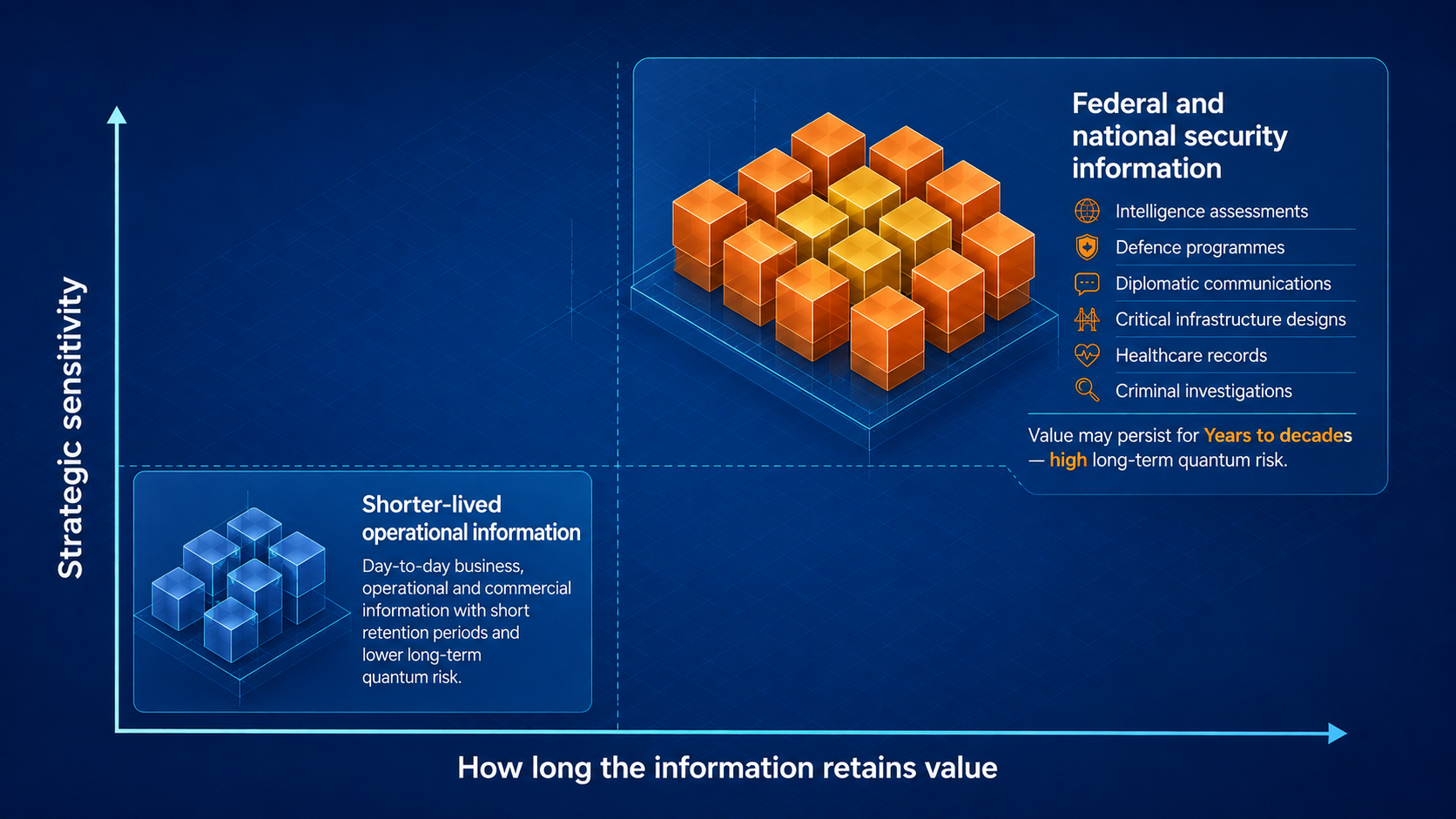
For organizations whose information loses value within days or weeks, this risk may be relatively limited. For Federal agencies, however, the situation is fundamentally different. Intelligence assessments, defense programs, diplomatic communications, critical infrastructure designs, healthcare records, criminal investigations and national security information often retain operational, legal or strategic value for decades. In these environments, the lifespan of the information significantly exceeds the expected arrival of practical quantum computing, making long-lived data an attractive target for adversaries prepared to think in decades rather than months. That is why CISA, the NSA and NIST have jointly published migration guidance, Quantum-Readiness: Migration to Post-Quantum Cryptography, directing Federal agencies to begin this transition now rather than waiting for quantum computers to mature.
Information lifespan determines the HNDL risk window
This is precisely why governments around the world have accelerated their investment in post-quantum cryptography (PQC) and quantum readiness initiatives. The objective is not simply to prepare for a future technological milestone, but to reduce the growing inventory of information that may already have been harvested for future decryption. Every year that sensitive information remains protected solely by cryptographic algorithms vulnerable to future quantum attacks increases the volume of data that could ultimately be exposed. NIST reinforced this urgency in August 2024 by finalizing its first three post-quantum cryptography standards ( FIPS 203, FIPS 204 and FIPS 205) giving agencies concrete algorithms to begin migrating toward. OMB's M-23-02 memorandum already requires Federal agencies to maintain and annually update inventories of cryptographic systems vulnerable to quantum decryption, prioritized by high-value assets, through 2035.
For Federal technology leaders, the challenge therefore extends beyond selecting new cryptographic standards. It requires understanding which information must remain confidential well into the future, where that information resides across increasingly complex digital environments, and how it is accessed by the rapidly expanding ecosystem of AI-enabled applications. Without that visibility, organizations risk approaching quantum readiness as an encryption project when, in reality, it is becoming an enterprise-wide information governance challenge.
Why Artificial Intelligence Changes the Quantum Readiness Conversation
The discussion surrounding Harvest Now, Decrypt Later often focuses on cryptography, yet the rapid adoption of artificial intelligence is fundamentally changing the nature of the challenge. While quantum computing threatens the algorithms used to protect sensitive information, AI is dramatically increasing the amount of information that organizations expose to intelligent systems, making the conversation about quantum readiness as much an architectural issue as it is a cybersecurity one.
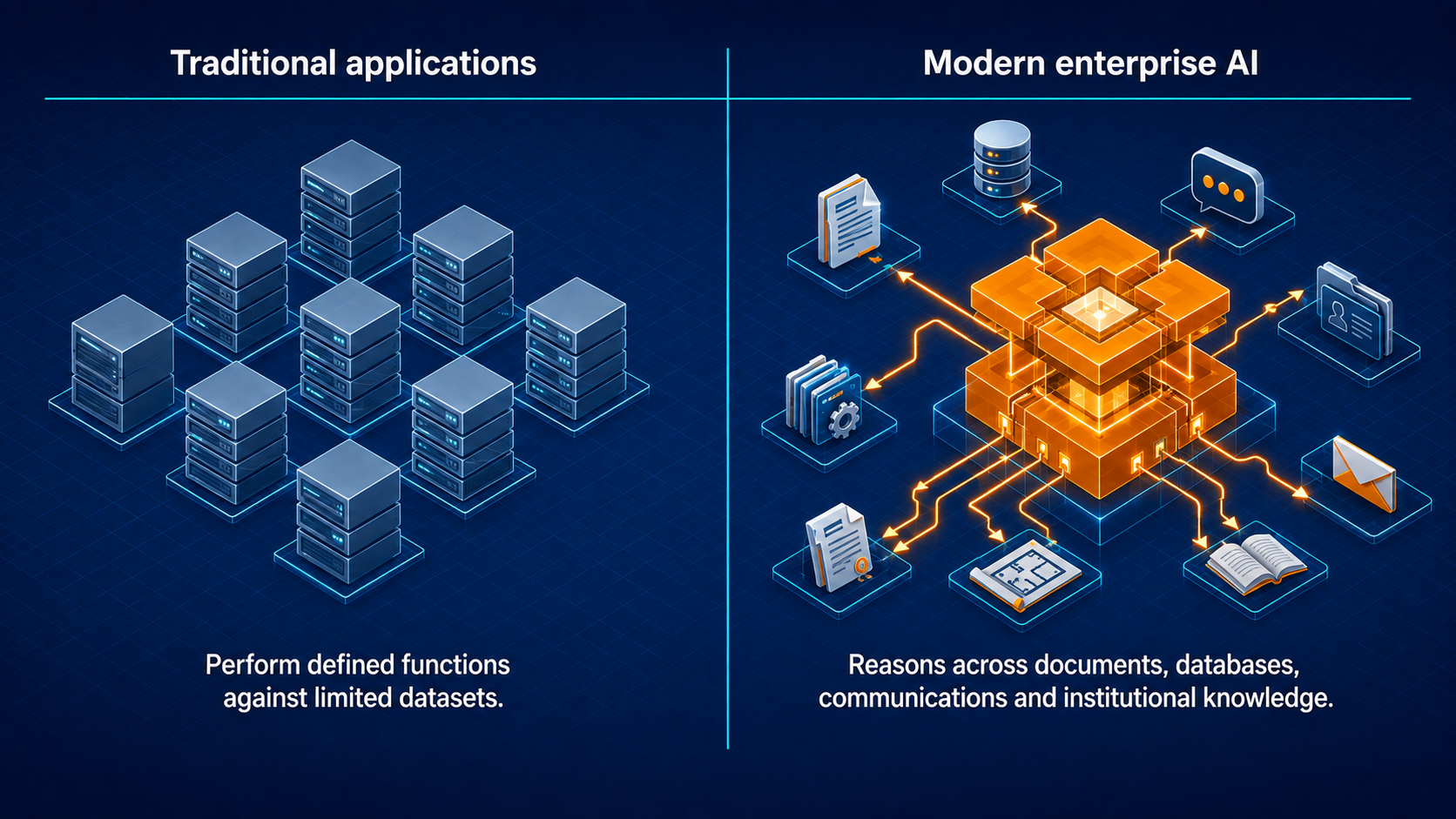
Unlike traditional enterprise applications, which were typically designed to perform specific functions against defined datasets, modern AI systems derive their value from their ability to reason across vast quantities of structured and unstructured information. Contracts, intelligence reports, operational documents, emails, policy manuals, databases, technical drawings and external knowledge sources are increasingly being connected into a single layer of enterprise intelligence capable of providing contextual answers in seconds. The more comprehensive the information available to AI, the more valuable those systems become. Equally, the more comprehensive that information becomes, the greater the consequences should its confidentiality or integrity ever be compromised. This is also what makes Harvest Now, Decrypt Later more dangerous in an AI-enabled environment: adversaries are no longer harvesting scattered, disconnected files, but information that AI has already aggregated into fewer, higher-value access points, making that information more valuable the moment it can eventually be decrypted.
This is also why the AI industry has begun exploring an emerging category of capability sometimes described as quantum-secure agents: AI agents built to combine autonomous reasoning with cryptographic protections designed to resist future quantum decryption. This category is still early, but it points toward where agentic AI architecture will need to go as agents take on more responsibility for accessing and acting on long-lived, sensitive information.
AI changes both the value and exposure of enterprise information
This shift has profound implications for Federal agencies. Every new AI initiative has the potential to increase the amount of long-lived, mission-critical information that becomes accessible through intelligent systems. While this creates significant opportunities to improve operational efficiency, accelerate decision-making and enhance citizen services, it also increases the importance of understanding exactly what information AI can access, where that information originated and whether every response generated by the system can be trusted.
For many organizations, this visibility remains surprisingly limited. Sensitive information is often distributed across legacy systems, departmental repositories, cloud platforms and document archives that have evolved over decades. As AI begins to bridge these disconnected environments, agencies frequently discover that the challenge is not simply protecting information from future quantum threats, but identifying where that information exists in the first place. Without a clear understanding of their information landscape, organizations cannot accurately assess which assets require long-term protection, which systems should be prioritized for post-quantum migration or how sensitive data is flowing between AI-enabled applications.
AI exposes an information landscape that many agencies cannot fully see
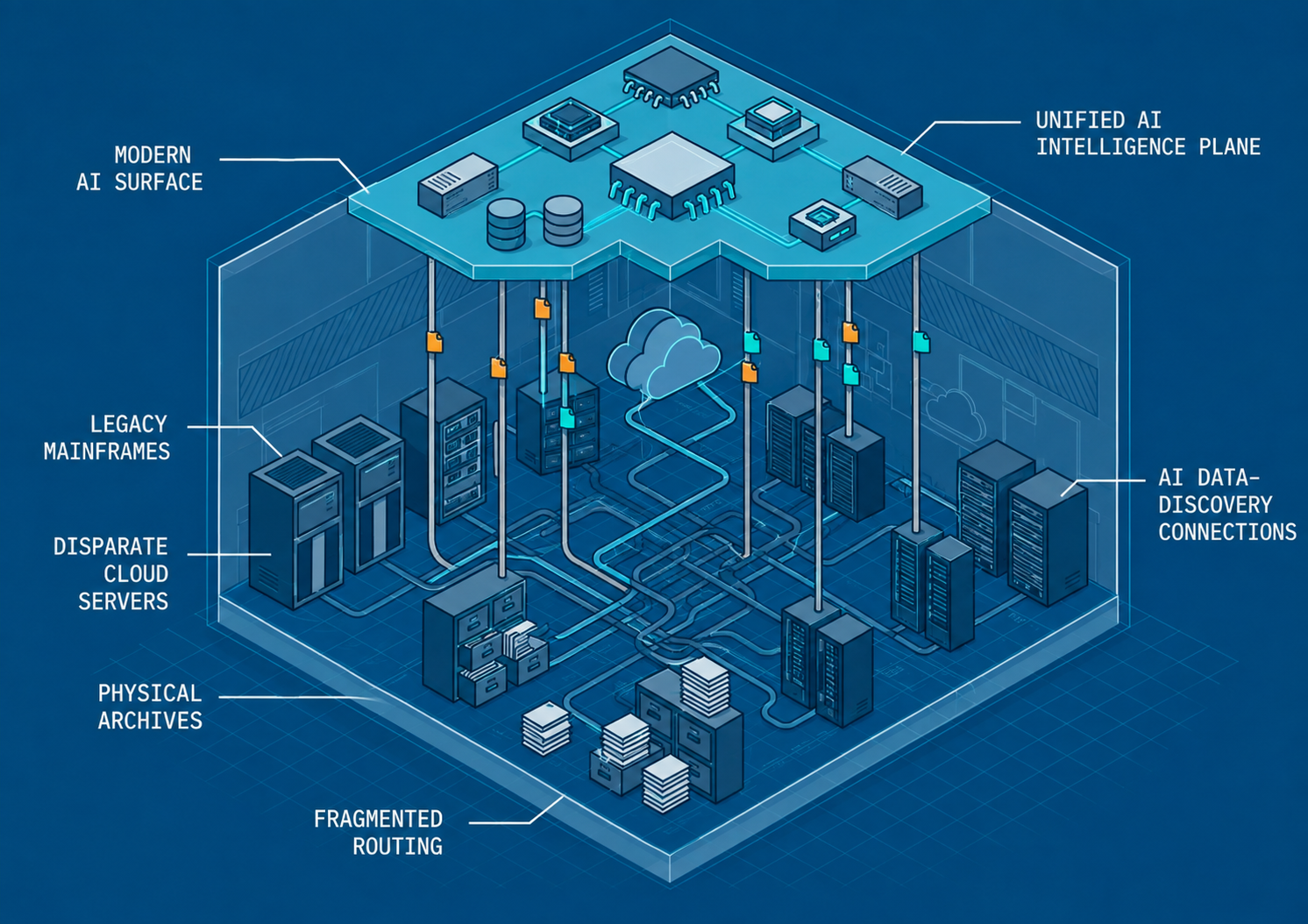
Federal agencies have encountered similar transitions before. Cloud computing transformed where information was stored, requiring new approaches to identity, access management and zero-trust security (PDF). Mobile computing expanded the enterprise perimeter and fundamentally changed endpoint protection. Artificial intelligence is now driving a comparable architectural shift. The challenge is no longer confined to securing systems; it is ensuring that the intelligence flowing between those systems remains governed, explainable and resilient against both today's threats and those anticipated in the decades ahead.
Strategic Comparison: Traditional Security vs. Architectural Intelligence
Why Federal Agencies Need More Than Post-Quantum Cryptography
The conversation surrounding quantum readiness is often framed as a race to replace today's cryptographic algorithms with post-quantum alternatives. While cryptographic migration will undoubtedly become one of the most significant cybersecurity initiatives of the coming decade, focusing exclusively on encryption risks overlooking a far more fundamental question: how well do organizations actually understand the information they are trying to protect?
This creates a challenge that encryption alone cannot solve. Post-quantum cryptography can protect information during transmission and storage, but it cannot determine whether an AI system is accessing the correct version of a document, whether conflicting information exists across multiple repositories, whether sensitive material has been copied into an unauthorized location or whether the response generated by an AI model can be traced back to an authoritative source. These are questions of information governance rather than cryptography, yet they increasingly determine whether AI can be trusted within mission-critical environments.
PQC is necessary, but it does not establish information trust
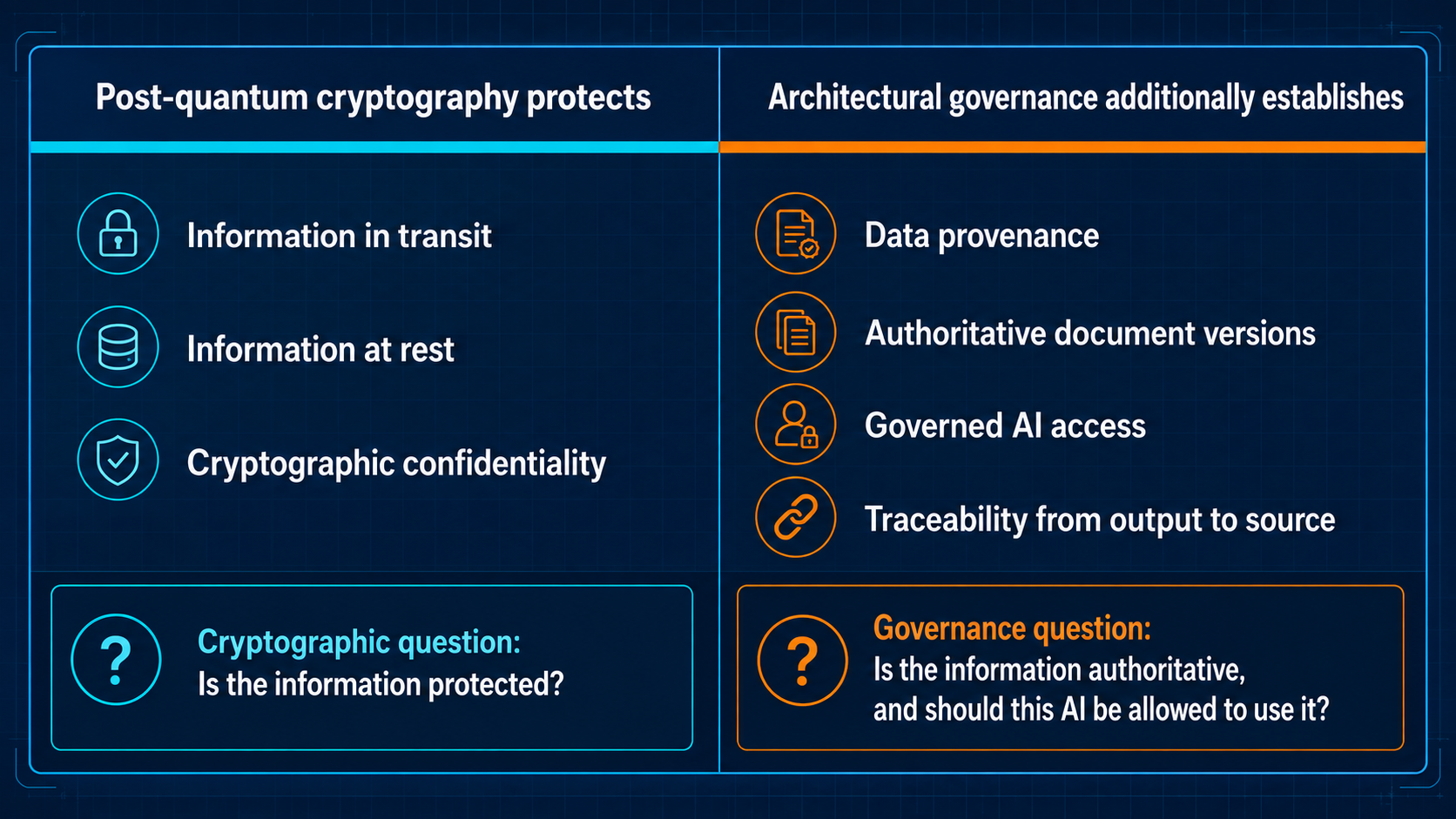
For Federal agencies operating in defense, intelligence, law enforcement and critical infrastructure, trust has always been inseparable from provenance. Decision-makers must understand not only what information has been presented, but where it originated, who has modified it, how it has been governed throughout its lifecycle and whether it remains authoritative at the point of use. As AI assumes greater responsibility for supporting operational decisions, these requirements become even more significant. An intelligent system that produces an accurate answer without providing confidence in the information that underpins that answer introduces a different class of risk, one that cannot be addressed through stronger encryption alone.
This is why many organizations are beginning to recognize that quantum readiness is evolving into a broader architectural discipline. Preparing for the quantum era requires more than implementing new cryptographic standards; it requires creating an environment in which information can be discovered, classified, governed and trusted before it is secured. Organizations that understand their information landscape will be able to prioritize the protection of long-lived data, accelerate PQC migration and deploy AI with greater confidence. Those that do not may find that the greatest obstacle to quantum readiness is not replacing encryption, but locating and governing the information that encryption was intended to protect.
From Cryptography to Architectural Intelligence: Building a Quantum-Ready Information Architecture
Executive Principle: Trust is no longer created by encryption alone. In the AI era, trust is no longer a feature. It is an architecture.
As artificial intelligence becomes embedded within operational decision-making, trust increasingly depends upon the architecture through which information is discovered, governed, accessed and ultimately acted upon. Organizations that approach encryption, information governance and AI governance as separate initiatives risk creating fragmented security strategies that become increasingly difficult to manage over time.
Instead, leading organizations are beginning to recognize that quantum readiness requires an integrated approach in which trusted information, governed intelligence and secure execution operate together as independent yet complementary layers. This architectural model not only strengthens resilience against future quantum threats but also improves the explainability, traceability and reliability of AI today.
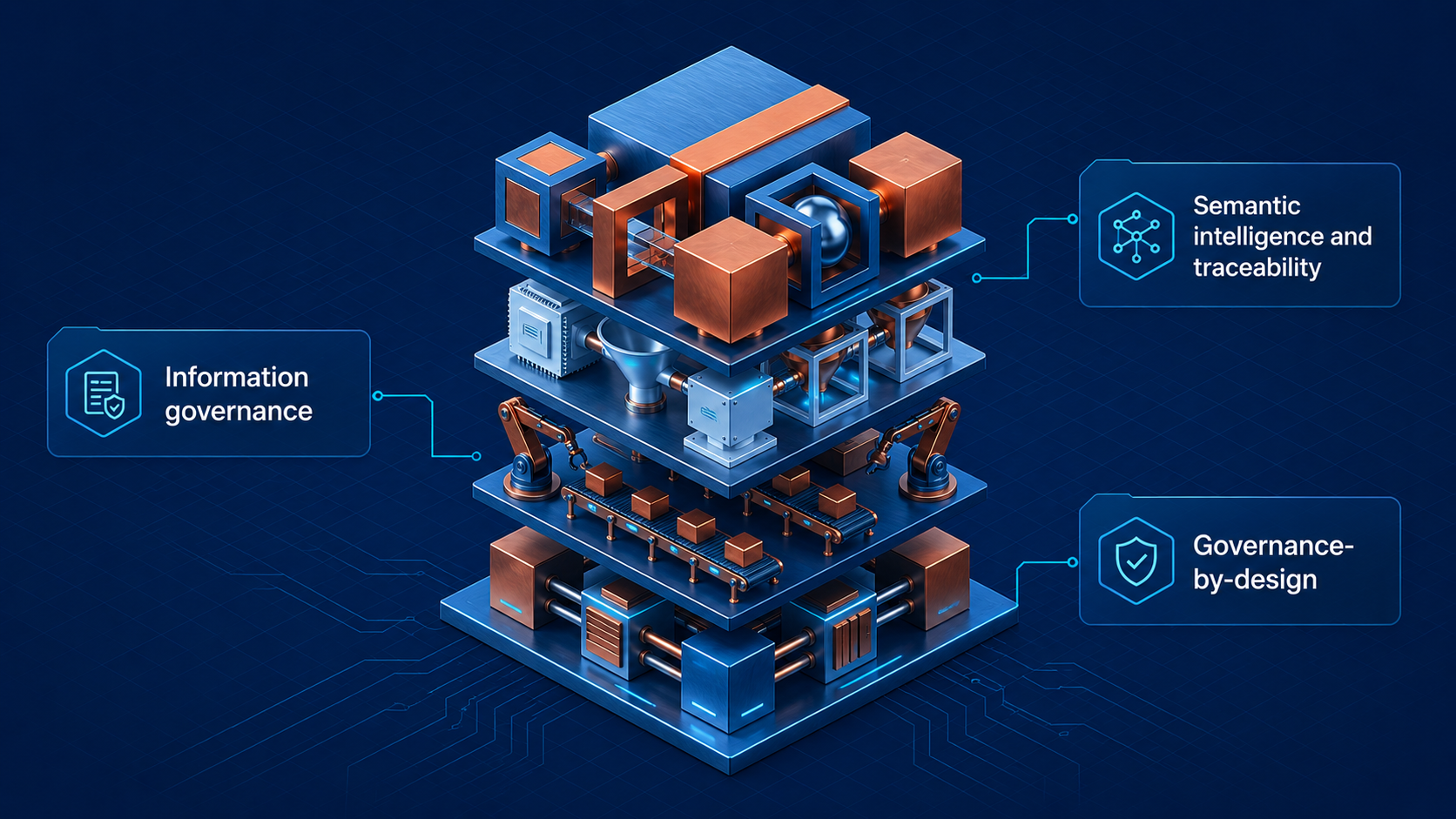
Architectural Intelligence combines three complementary layers of trust
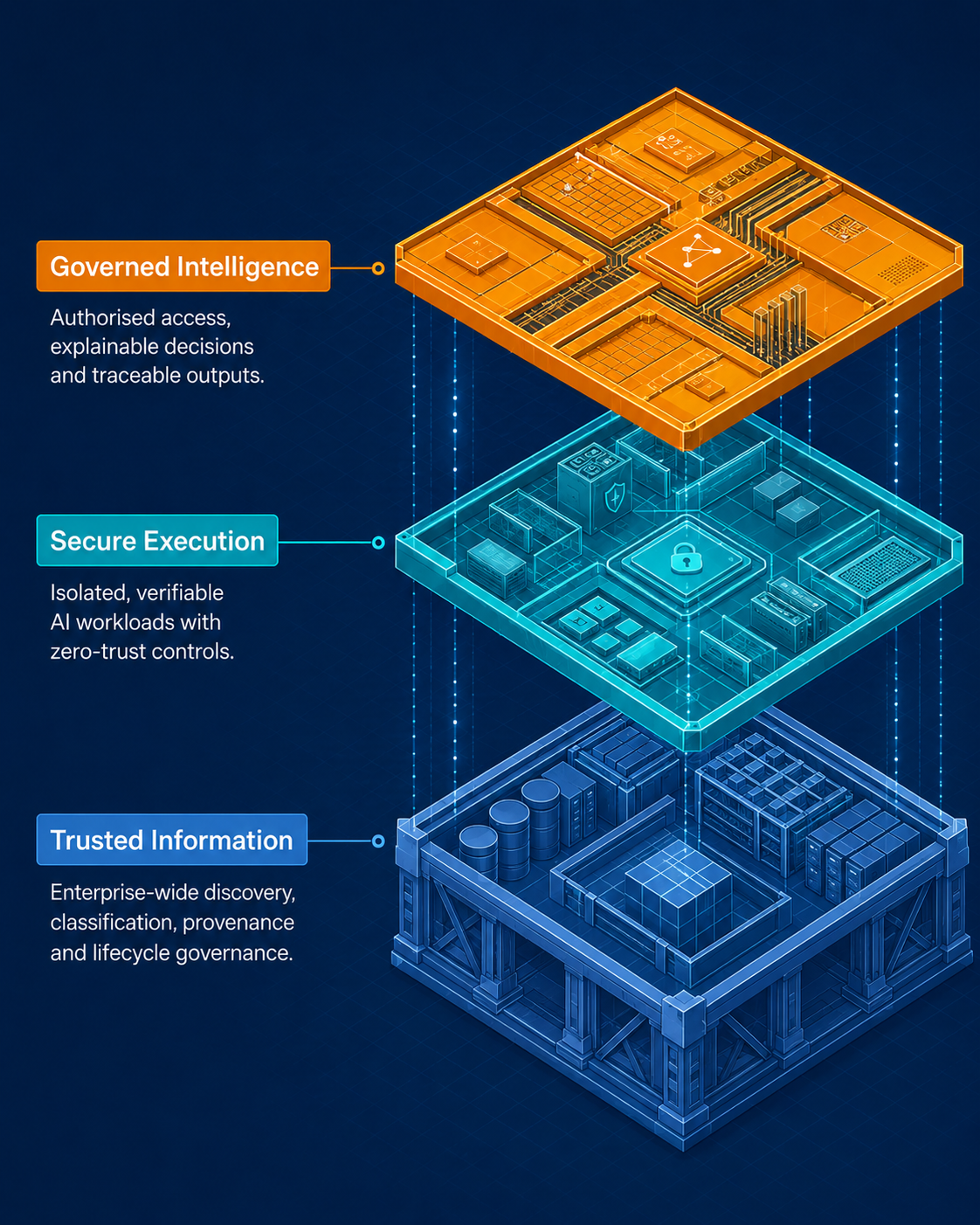
If Harvest Now, Decrypt Later demonstrates anything, it is that quantum readiness is not simply about preparing for a new generation of cryptographic standards. It is about building an information architecture capable of supporting trust over decades rather than years. The agencies that will navigate the quantum transition most successfully are unlikely to be those that merely replace one encryption algorithm with another. They will be those that understand their information assets well enough to determine what requires long-term protection, how that information is used across the enterprise and whether the intelligence derived from it can be trusted throughout its lifecycle.
Building that trust requires more than governing information and AI models alone. It also requires confidence in the environments in which AI workloads execute. Increasingly, organizations are recognizing that secure runtime infrastructure forms another essential layer of trusted AI, ensuring that autonomous workloads remain isolated, verifiable and resilient regardless of the underlying cloud or compute provider. Part of this emerging layer is the industry's early work toward quantum-secure agents: AI agents whose execution environment and communications are being designed, while still in development, to withstand future quantum decryption attempts, not just today's threats. In this model, governance does not end when an AI reaches a decision; it extends throughout the entire execution lifecycle.
Governance must continue from information access through execution
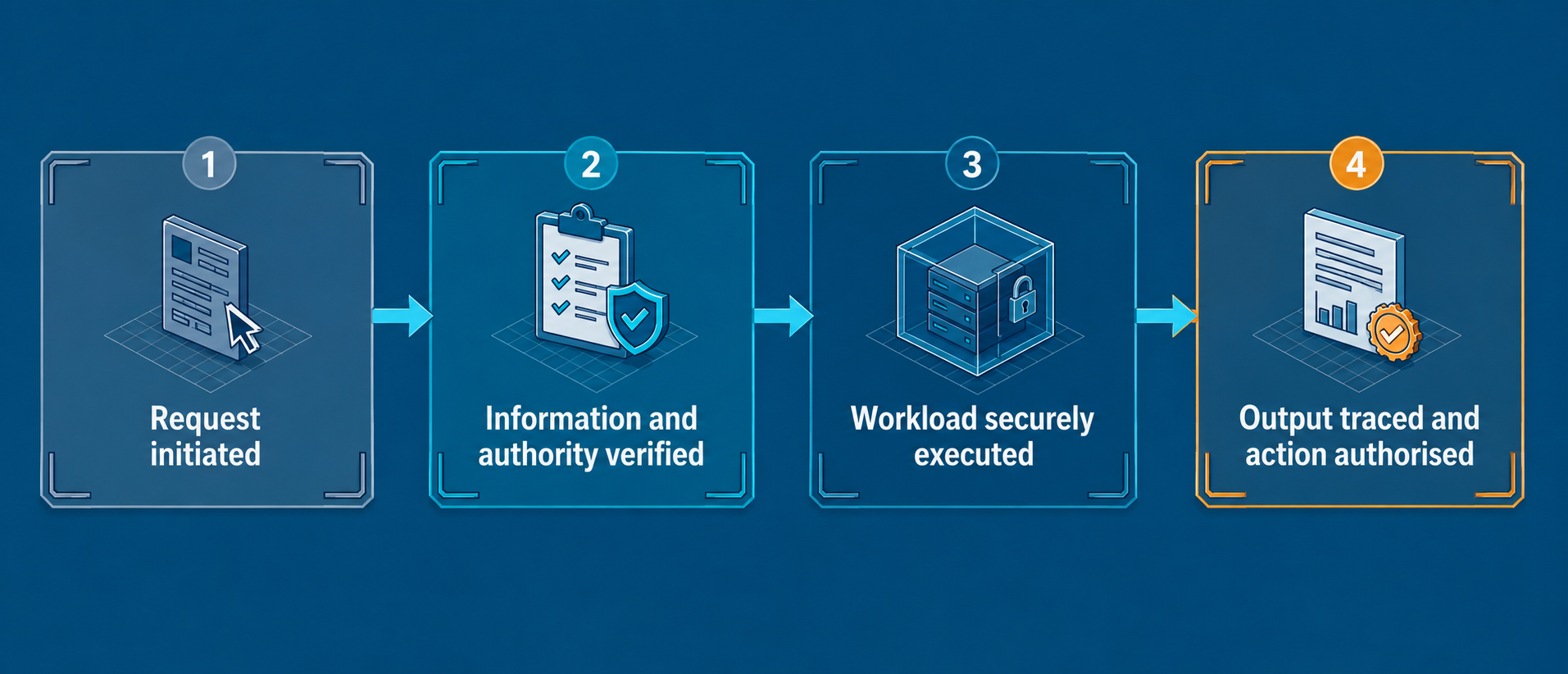
Just as zero-trust security transformed enterprise networks by assuming no user or system should be trusted by default, future AI architectures are beginning to apply the same principle to autonomous execution, ensuring that trust is enforced by architecture rather than assumed through infrastructure.
The organizations that gain the greatest advantage from artificial intelligence over the coming decade will not necessarily be those deploying the largest language models or the most advanced automation. They will be those that build the strongest foundations beneath those technologies. It is created through architecture that allows information to remain secure, discoverable, explainable and governed from the moment it is created until the day it is ultimately retired.
From Quantum Readiness to Trusted Intelligence
The emergence of Harvest Now, Decrypt Later represents more than a new cybersecurity challenge. It marks the beginning of a broader architectural transition in which organizations must rethink not only how information is encrypted, but how it is discovered, governed and trusted throughout its entire lifecycle.
Artificial intelligence has accelerated this transition by transforming information from a passive enterprise asset into an active decision-making resource. Every AI system deployed within a Federal agency increases the value of institutional knowledge, while simultaneously increasing the importance of ensuring that knowledge remains secure, explainable and resilient against future threats. As quantum computing continues to advance, the relationship between AI governance and cybersecurity will become increasingly inseparable, and capabilities like quantum-secure agents, still emerging today, are likely to become a meaningful part of that picture as they mature.
For Federal agencies, the objective should not simply be to achieve compliance with the next generation of cryptographic standards. Compliance represents an important milestone, but it is only one component of a much larger strategy. Long-term resilience will depend upon an organization's ability to understand where sensitive information exists, how it moves throughout the enterprise, which datasets require protection for decades rather than years and whether every AI-driven insight can be traced back to information that remains authoritative and trustworthy.
The agencies that begin this work today will be significantly better positioned to navigate the transition to post-quantum cryptography, because they will already possess the visibility, governance and architectural foundations required to support secure AI at enterprise scale. Those that delay until quantum computing becomes an operational reality may find that the most difficult challenge is not deploying new encryption algorithms, but untangling years of fragmented information, disconnected systems and unmanaged AI deployments.
Delaying foundational work increases the complexity of future PQC migration
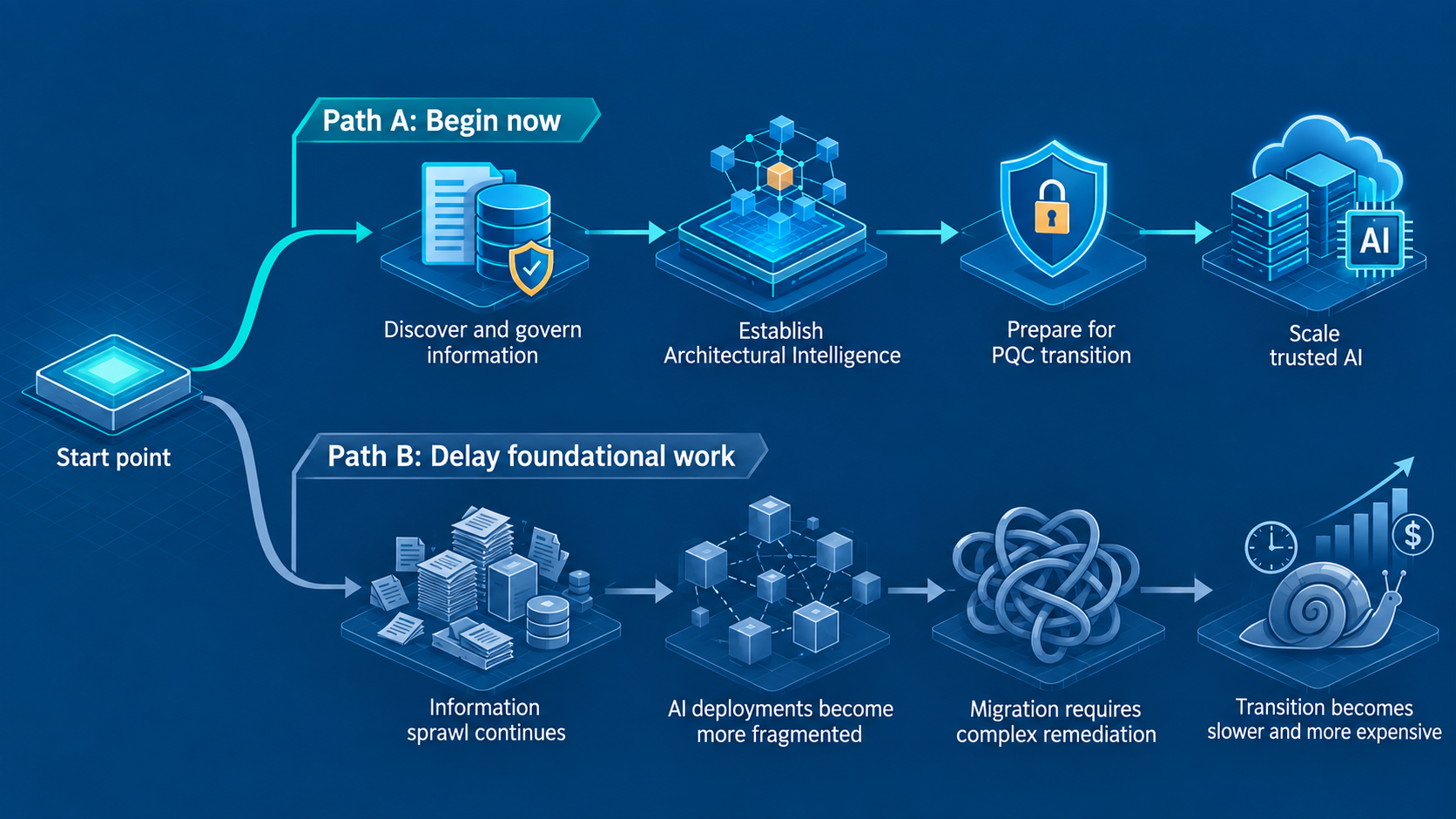
Preparing for that future therefore begins with a different question. Rather than asking whether today's encryption will withstand tomorrow's quantum computers, organizations should ask whether the architecture supporting their artificial intelligence has been designed to remain trustworthy for the decades ahead.
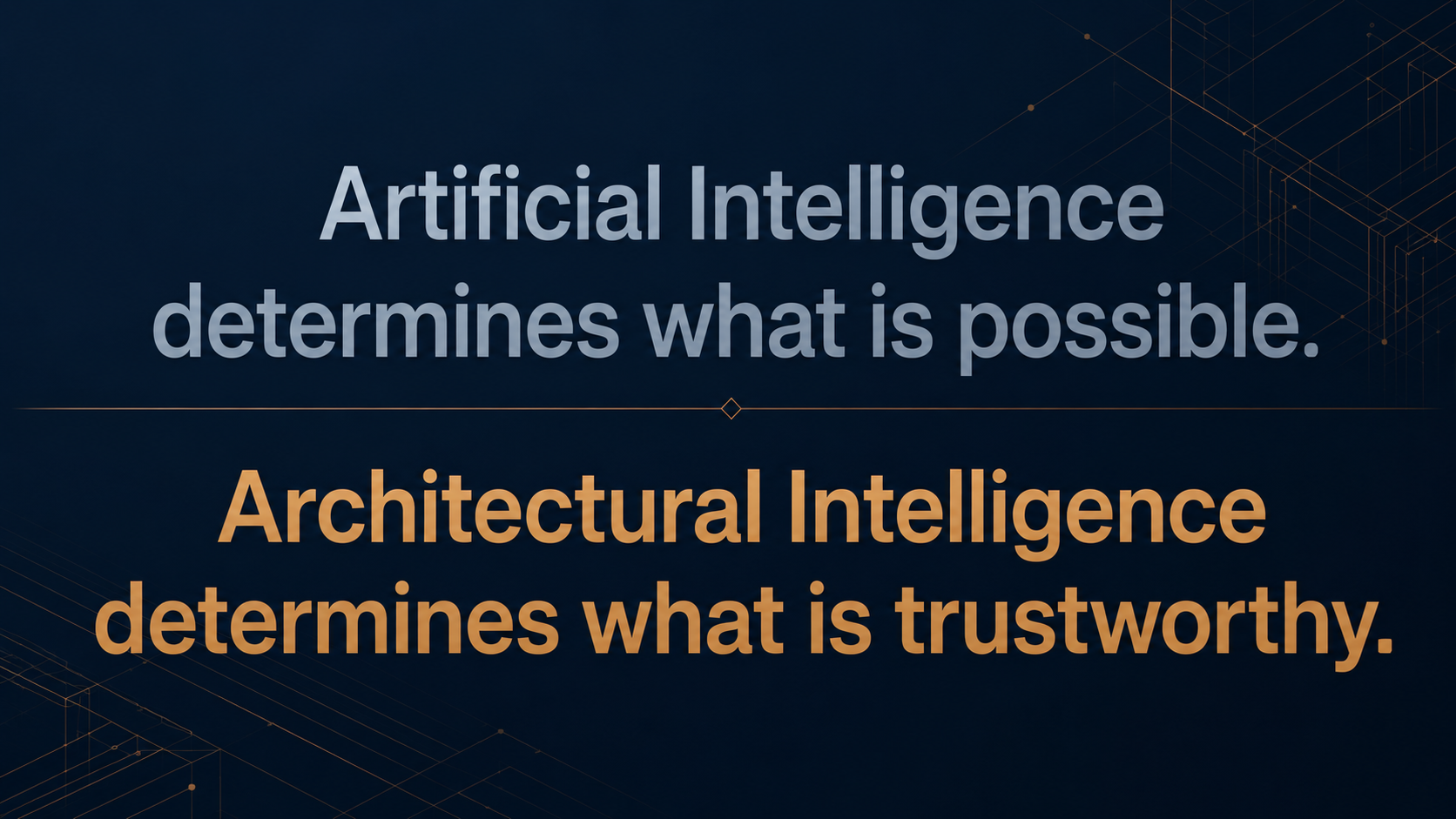
The agencies that succeed in the quantum era will not simply deploy stronger cryptography. They will build the architectural foundations that allow trust to persist as technologies evolve, threats change and autonomous systems become increasingly capable. In the decades ahead, competitive advantage will belong not only to organizations with the most intelligent AI, but to those with the strongest architecture governing it.
About EmergeGen
EmergeGen helps organizations build Architectural Intelligence by combining information governance, semantic intelligence, AI traceability and governance-by-design into a unified architecture for trusted enterprise AI.
Key Takeaways
- Harvest Now, Decrypt Later (HNDL) is a present-day risk, not a future one.
- Long-lived Federal data is already a target for collection by sophisticated adversaries.
- Artificial intelligence increases the strategic importance of governing enterprise information, because it aggregates sensitive data into fewer, higher-value access points, making that data more dangerous once it is eventually decrypted.
- Post-quantum cryptography is essential, but encryption alone does not deliver quantum readiness.
- Organizations that invest in information governance and trusted AI architectures today will be better positioned for the quantum era.
- Quantum-secure agents (AI agents engineered to resist future quantum decryption) are an emerging capability still in active development across the industry, and one that Federal agencies should watch as agentic AI takes on more responsibility for sensitive workloads.